

Participants are about five times as likely as non-participants to follow tennis or volleyball, compared with 1.5 times as likely to watch football
By Osbaldo Franco, Founder & Principal, Mod7 Research Strategy
November 27, 2026
Football was the most followed sport in Mod7's August 2026 survey of 1,066 U.S. adults, but most of its followers don’t play it. Tennis, volleyball and cycling look different as participants in these sports are several times as likely as non-participants to follow them.
For CMOs and brand strategists, that overlap shapes a basic sponsorship choice: reach a sport’s broad audience, or the people who play it.
Broader research points to the same split, with U.S. sports following clustered around big-league sports and participation around low-barrier leisure sports.[1] The survey asked respondents which sports they planned to follow over the next three months and, separately, which ones they take part in themselves. Matching the two answers shows how much of each sport’s audience also takes part in it.
Football leads in following and trails in participation
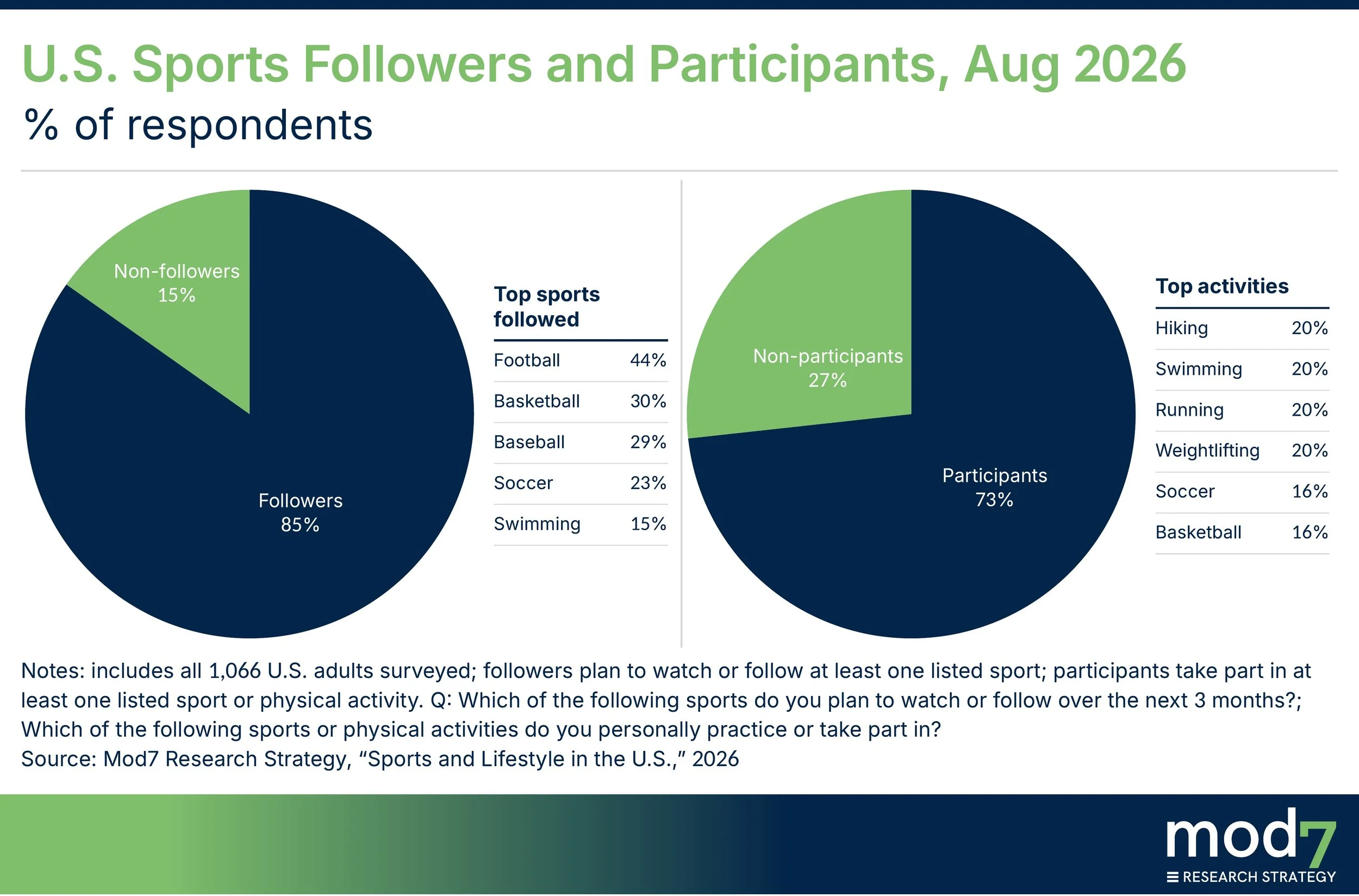
Basketball (30%) and baseball (29%) following trail football (44%) by a wide margin. But far fewer respondents say they plan football (11%). The 33-point gap between viewership and participation for football is the largest among the sports our survey measured.
Showing the reverse pattern, running is among the activities respondents most often report taking part in (20%), but fewer than half as many planned to follow it (9%), a stark contrast with football’s dynamic.
Participants follow their own sport more often, by very different margins
In every sport the survey measured, participants were more likely than non-participants to follow it, with noticeable differences by sport.
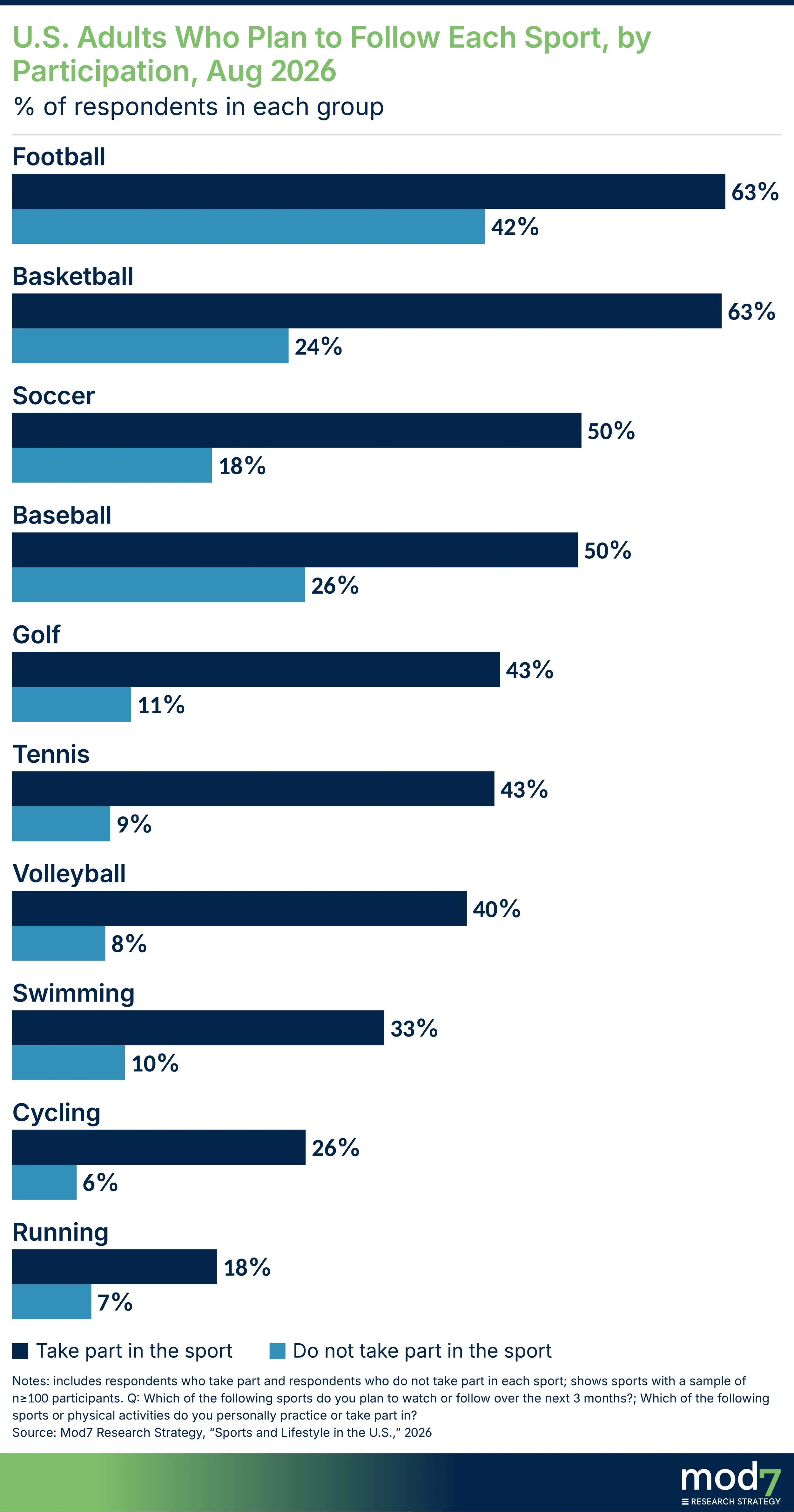
Take tennis. Respondents who play the sport planned to follow it at almost five times the rate of those who do not (43% vs. 9%). A near-identical relationship exists in volleyball, where 40% of players also follow the sport compared to 8% of non-players. Cyclists reported more than four times intent to follow cycling coverage compared to non-cyclists (26% vs. 6%), and golfers were about four times as likely as non-golfers to follow their sport (43% vs. 11%).
Football sits at the other end of the spectrum. Participants were still more likely than non-participants to follow it (63% vs. 42%), but only by a factor of 1.5%, with baseball close behind at about 2x. Most other sports land somewhere in between, including boxing and winter sports, both of which were left out of the chart because of their small bases.
For sponsors, these differences indicate how closely participation and fandom overlap within each sport. In tennis, the 11% of adults who play account for 39% of the sport’s followers, so sponsorships that reach players of the sport, such as those tied to clubs and amateur events, have the potential to reach a substantial share of the sport’s audience as well. In football, the 11% who play account for 16% of followers, so participation offers far less of that leverage, making broader media matter more. Understanding the overlap is crucial as sponsorship tends to lift brand perception far more among a sport’s fans than among non-fans, especially when the brand is a natural fit for the sport.[2]
Most of the football audience does not play the game
Seen from the audience side, about one in six football followers take part in the sport themselves (16%), the lowest share among the 10 sports featured in the chart.
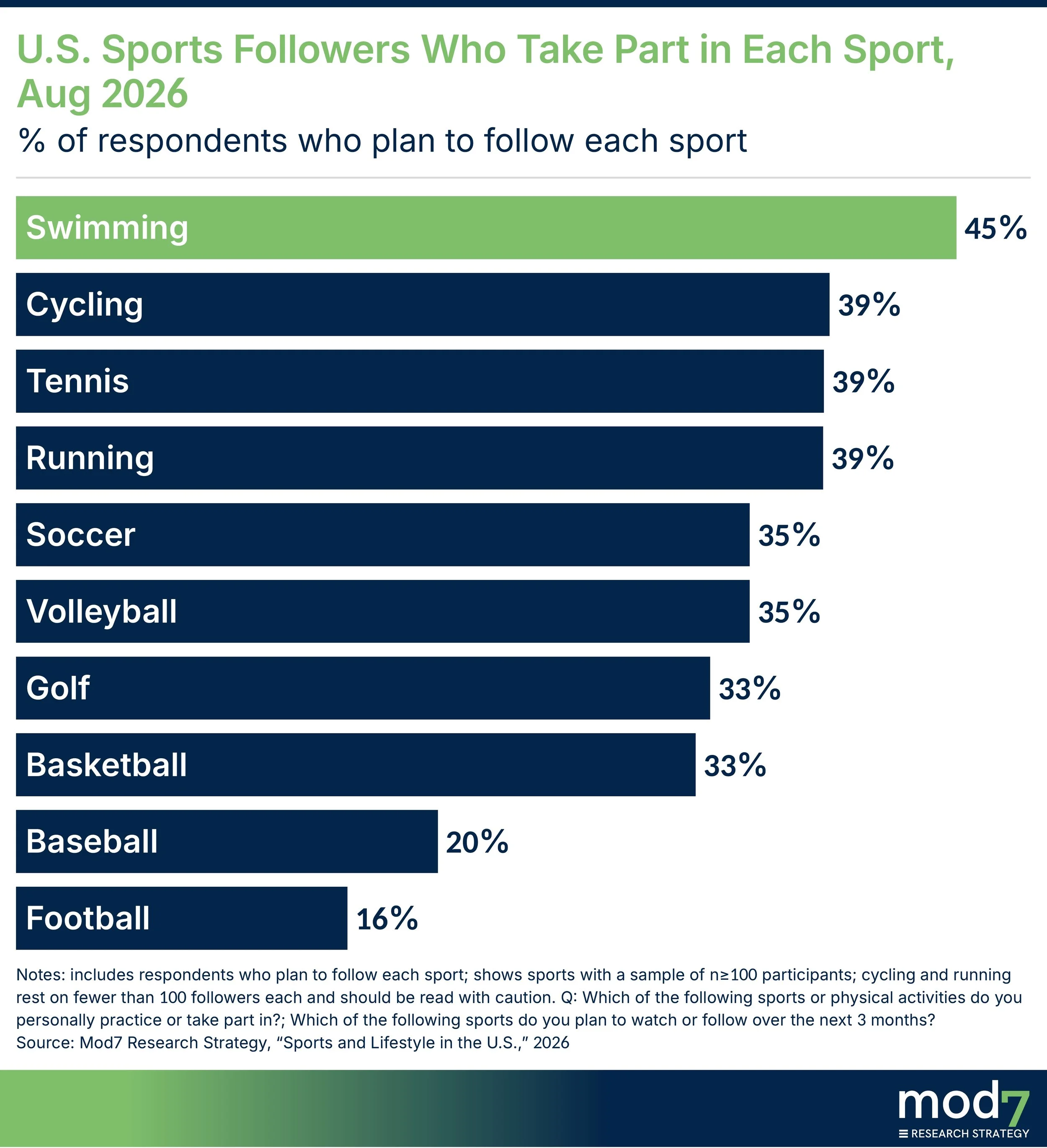
Swimming sits at the opposite end, with close to half of its followers swimming themselves (45%). Tennis, running and cycling are not far behind.
These differences speak to the value of sponsorships, and what they actually buy. Football delivers a huge audience of people who mostly watch but don’t play. Tennis, running, cycling and swimming deliver smaller audiences with a much larger share of participants.
None of this means taking part in a sport makes people follow it. The link could run either way, or both could come down to things the survey did not measure, like budgets, access and availability, or even family habits.
Timing matters too. The question about sports following covered the three months from early August 2026, which favors fall sports, football above all. The comparisons between participants and non-participants are less exposed to that.
Nevertheless, sponsors should know whether a commitment to a sport is buying an audience of spectators or a community of participants. Football and swimming sit on the opposite ends of that spectrum.
———————————————————————
———————————————————————
Notes
[1] EY, “The 2026 EY US Sports Engagement Index,” May 2026.
[2] Ipsos, “The Long and Short of Sports Sponsorship,” May 2026.